Storm Damage Tree Removal in Lake County
Hurricanes and tropical storms don’t give you much notice. When a tree comes down on your property, JT’s Tree Removal always gets there fast, cleans it up right, and gets your yard back to normal.
Storms don’t wait for convenient timing. A hurricane comes through at midnight. A tornado touches down while you’re at work. Lightning splits your oak tree and half of it lands on your fence. JT’s Tree Removal responds to storm damage throughout Lake County and Central Florida. We’ve been cleaning up after Florida storms since 2012. Call (352) 504-1210 and we’ll get to you as quickly as conditions allow.
What Florida Storms Do to Trees
Florida weather is hard on trees. We get more lightning strikes than almost anywhere in the country. Hurricane winds snap trunks and uproot root systems that took decades to establish. Tropical storms dump enough rain to saturate soil until trees that looked perfectly healthy just tip over. Tornadoes do things to trees that are hard to believe until you see them.
Wind damage shows up in a few ways. Branches snap off and land on roofs, fences, cars, and pool cages. Entire trees snap at mid-trunk and fall in whatever direction the wind was blowing. Trees that were already weakened by disease or age come down first. Sometimes a tree lands where nothing important is. More often it lands somewhere that needs immediate attention.
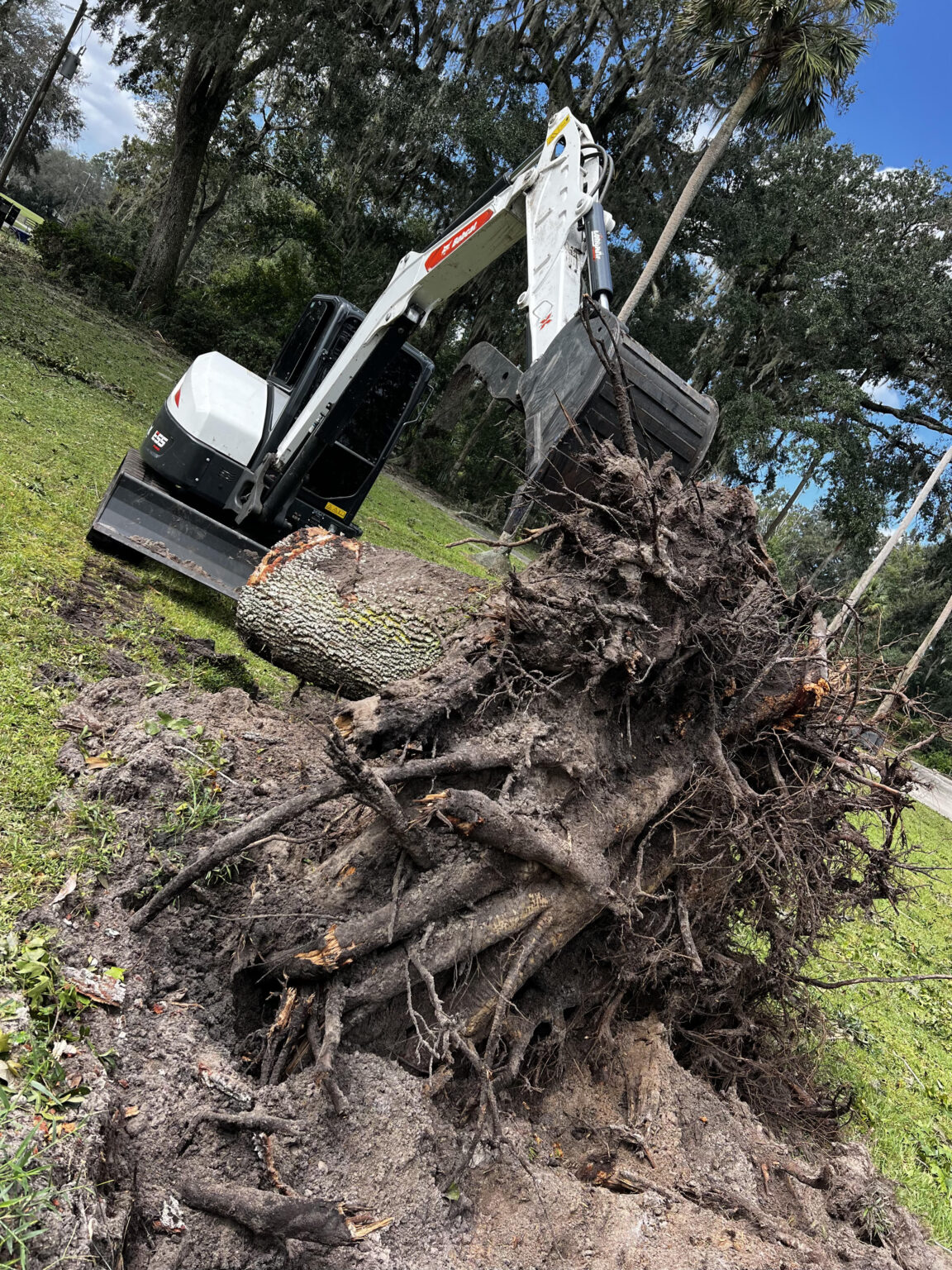
Root failure is the other common problem. Heavy rain saturates Florida’s sandy soil. The ground can’t hold a root system the way dry compacted soil does. Big trees tip over slowly at first, then all at once. When a large root ball pulls up, it takes a chunk of your yard with it and leaves a crater you have to deal with.
Lightning is its own category. A direct strike can blow bark off a tree in a spiral pattern all the way down the trunk. Sometimes the tree looks fine from a distance and is completely destroyed inside. Sometimes it catches fire. Either way, a lightning-struck tree needs professional evaluation before you assume it’s still safe to leave standing.
After the Storm Passes
The first thing to do after a major storm is stay safe. Don’t go near trees that are leaning against power lines. Don’t walk under trees with large hanging branches that look unstable. Storm damage creates hazards that aren’t always obvious.
Once it’s safe to assess your property, document everything with photos before any cleanup starts. Walk around and look at every tree. Note which ones fell, which ones lost major limbs, and which ones look like they might have shifted. That documentation matters if you’re filing an insurance claim.
Then call us. We’ll come out and assess what needs to happen. Some storm debris is straightforward cleanup. Some situations require careful rigging to remove trees that are leaning against structures. We’ve seen every type of storm damage scenario in Lake County and we know how to handle each one safely.
Storm Damage Tree Removal Process
We start by making the area safe. If a tree has fallen on a structure, we work carefully to remove it without causing more damage to the building underneath. Rushing that process causes problems. We take the time to rig and lower pieces rather than just cutting and letting things fall.
Hanging branches are a serious hazard. A large branch that’s partially broken and dangling overhead can fall without warning. We call these widow makers for good reason. We remove them before doing anything else.
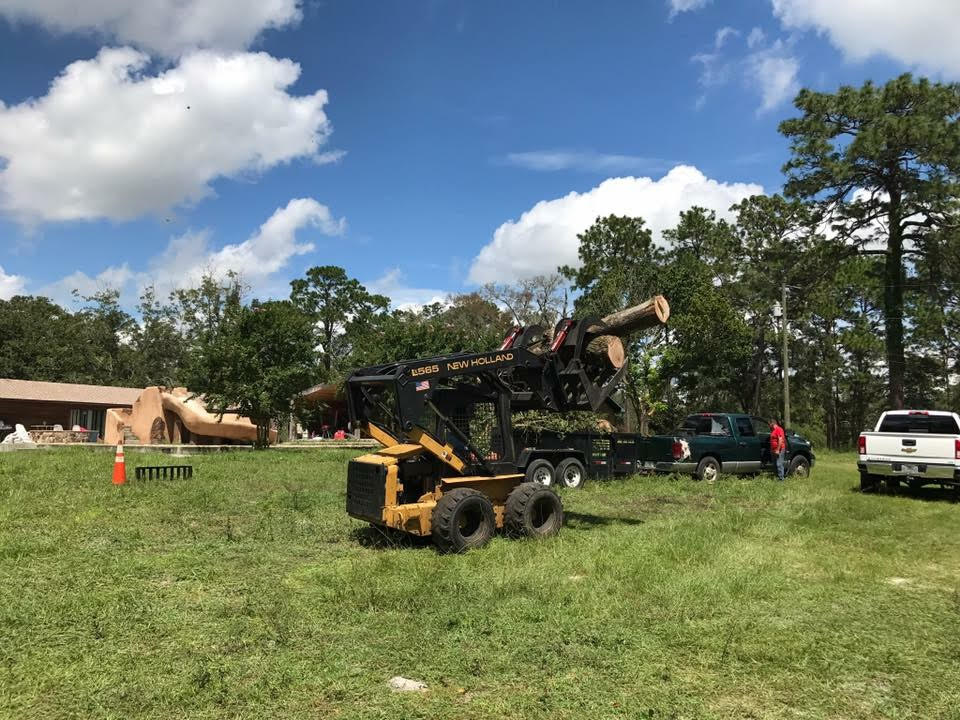
Once immediate hazards are handled, we move to full removal or cleanup depending on what the tree needs. Trees that are completely fallen get cut into sections and hauled away. Trees that lost major limbs but are otherwise healthy may just need proper pruning to stabilize them going forward. We tell you what we recommend and why.
We clean up thoroughly when the work is done. Storm cleanup already leaves your yard looking rough. We don’t add to that by leaving debris behind.
Insurance Claims and Storm Damage
Most homeowner policies cover tree removal when a tree falls on a structure. The tree in your yard that fell but didn’t hit anything is usually not covered, even though it still needs to be removed. Policies vary and it’s worth calling your agent to understand what you have.
We can provide documentation of the damage and the work performed. Keep your photos, keep our invoice, and keep any notes from your insurance adjuster. That paperwork matters when claims get complicated.
We don’t deal with insurance companies directly on your behalf. But we can help you understand what happened and give you accurate written documentation of the tree damage and removal work.
Storm Season Preparedness
The best time to think about storm damage tree removal is before a storm hits. Trees with large dead branches, visible trunk decay, or root problems near your house are accidents waiting to happen. A professional assessment before hurricane season can identify which trees pose real risk to your property.
We offer pre-storm evaluations. We look at your trees honestly and tell you which ones need attention. Sometimes that means removing a tree that looks fine from the street but has problems we can see up close. Sometimes it means trimming branches that would act like a sail in high winds. Proactive work costs less than emergency cleanup after the fact.
Lake County sees serious weather every hurricane season. Preparation matters.
EXCELLENT Based on 128 reviews
 Posted on Google
 Elizabeth HickmanAbsolutely amazing job! The team was professional, efficient, and did beautiful work trimming our trees, we couldn’t be happier with the results and highly recommend them!Posted on Google
 Susana BarriosI had a great experience with this tree removal company! From start to finish, the team was professional, reliable, and very respectful of my property. They arrived on time, worked efficiently, and did an excellent job removing the tree and cleaning everything up afterward. I really appreciated their attention to detail and how carefully they handled the entire process. The communication was also excellent, and the price was very reasonable. I would definitely recommend this company to anyone looking for professional and dependable tree removal services!Posted on Google
 jerry leeAmazing work, we had this massive tree in-between 2 power lines and a fence. Few hours later, the entire tree and crew are gone. Will be calling them back for the next one.Posted on Google
 Lexi BarringtonThey were so prompt with their service that not even a day had gone by between when I First contacted them to when they took the tree down. They were very efficient and left it looking nicer than it was before.Posted on Google
 Kevin WhiteMoe came out gave me an estimate, price was reasonable, the guys showed up at 8:00am on time with all the proper equipment to remove several large trees at my property in Eustis , crew cleaned up as if the tree were never there. Highly recommend JTS Tree Removal.Posted on Google
 LindaVery happy with the response time in getting back to me with estimate about tree work needing to be done. Also very accommodating with time line to get trees taken down since they were dead. Sent pictures before and after work was done. Overall very happy with ALL aspects of the job they did! Even our neighbor commented on what a great job they did. Highly recommend them!Posted on Google
 Denise PalekJT and Tanya are the best and easy to deal with. So fair and what he prices is it no additional fees hidden. Denise (CAM)Posted on Google
 Keith & Sherry DentonJT came out right away to remove a fallen tree for us. The guys were quick and did a great job with a tricky situation and clean up. Very happy and now trying to get scheduled for more work.Posted on Google
 Lorri BoothThe guys were very professional. They responded to my call promptly and communicated throughout the project. They had great team work and completed the project beautifully. I would highly recommend them!Posted on Google
 Shellesa Reynolds-BrownJT is humble and professional. He is highly responsive and his crew are true professionals. Every time we needed them, they responded quickly. His crew has always been respectful of our property and ensures that we are fully satisfied with the work. It’s amazing to see how quickly they work and the extreme cleanliness of the job site when completed. Trusting JT and his crew to take care of us like family is an stress-free experience.
Things To Do In Lake County, FL

Top Restaurants In Lake County, FL
We Serve All of Lake County
Storm damage calls come from everywhere we work. Eustis. Leesburg. Mount Dora. Tavares. Clermont. The Villages. Lady Lake. Groveland. Minneola. Fruitland Park. If you’re in Central Florida and a storm just did damage to your trees, we can help.
Get Your Property Back to Normal
Storm damage is stressful. A fallen tree on your fence or roof makes a bad situation worse. The faster you get it handled, the sooner things go back to normal.
We respond to storm damage calls as quickly as possible once it’s safe to work. After major storms we get busy fast, so calling early puts you higher in the queue. Don’t wait and hope the situation improves on its own.
Call (352) 504-1210) to reach us directly. You can also contact us online or see our full list of tree services to learn more about what we do. Let’s get your property cleaned up and safe again.