Dead Tree Removal in Lake County, FL
A dead or dangerous tree doesn’t always fall when you expect it to. It is not a good idea to wait for a storm to make that decision for you! JT’s Tree Removal gives you a straight answer and gets it handled fast.
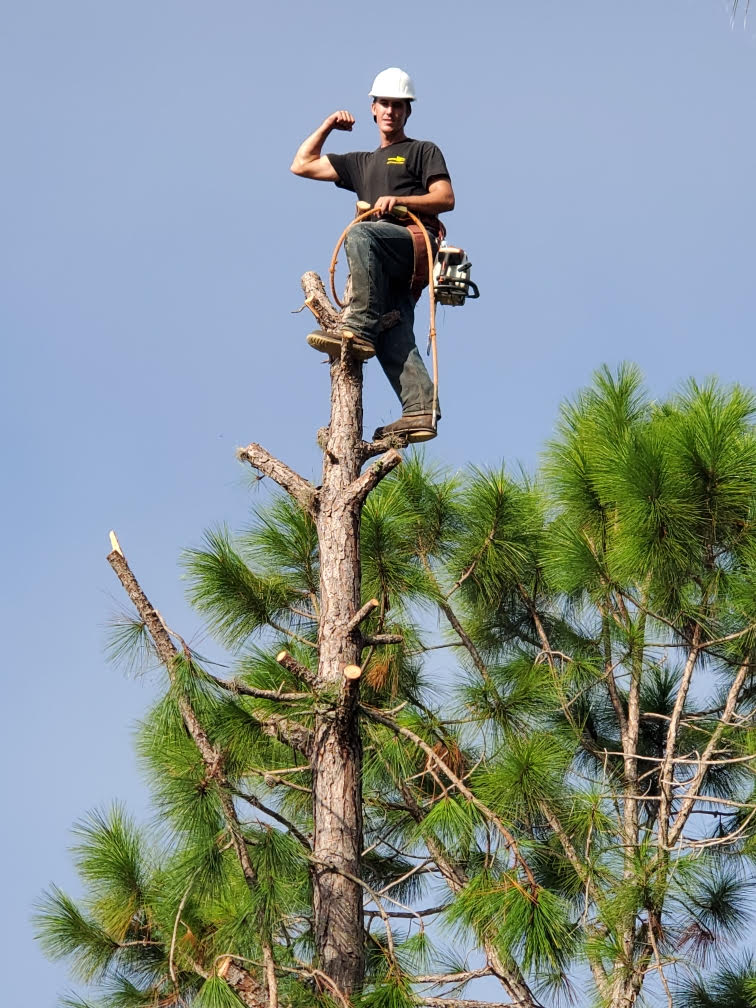
Dead trees are one of the most common calls we get in Lake County. Homeowners in Leesburg, Clermont, Mount Dora, and across the county watch a tree go from healthy to bare over a season or two, and then wonder what to do next.
The short answer is this: once a tree is dead, the clock starts ticking. The wood begins to rot from the inside. Roots start to lose their grip. What looks solid from the outside can be hollow and weak underneath. And when the tree finally comes down (whether in a storm or on a still afternoon), it doesn’t ask where your car is parked or whether your kids are playing in the yard.
We’ve been removing dead and hazardous trees across Lake County for 14 years. We’ll come out, assess the situation honestly, and give you a written quote before we touch anything.
Warning Signs Your Tree Is Dead, Dying, or a Safety Hazard
No Leaves During Growing Season
If your tree isn’t leafing out when everything else is green, that’s a serious problem. One bare section could mean a dead limb. A fully bare tree in spring or summer is more than likely dead.
Bark Falling Off in Large Pieces
Healthy trees hold their bark. When it starts falling off in big chunks without growing back, the tree underneath is dying. Bare wood exposed to the elements rots faster than you can imagine.
Cracks or Splits in the Trunk
A crack running vertically up the trunk is a major red flag. It means the tree has structural damage that can’t be repaired. Cracks near the base are especially dangerous as that’s where the tree needs to be strongest.
Fungus or Mushrooms Growing at the Base
Mushrooms growing around the base of a tree mean the root system is rotting. The tree may look fine from 20 feet away. But underground, the roots holding it up are breaking down. This tree needs to be assessed immediately (if not sooner!).
Visible Root Damage or Heaving Soil
If the soil around the base of the tree is lifting or cracking, the root system is under stress. This often shows up after construction nearby, heavy storms, or prolonged flooding. And these are all very common in Lake County.
Large Dead Limbs Hanging Over Your Property
Tree crews call these widow makers for a reason. A heavy dead limb hanging over a roof, driveway, or play area can fall without warning. Even if the rest of the tree is healthy, dead limbs need to come down!
Why Waiting on a Dead or Hazardous Tree Is a Gamble You Don't Want to Take
Insurance May Not Cover You
Florida homeowner policies often include negligence clauses. If you knew a tree was dead or damaged and didn’t remove it, your insurer can deny the claim when it falls. Removing a known hazard or dangerous tree is the ONLY way to protect your coverage.
Dead Trees Get Harder to Remove Over Time
The longer a dead tree stands, the more the wood rots and the less predictable it becomes. Fresh deadwood is easier to work with safely. Old rotted wood can fail unexpectedly mid-job, which is why experienced crews and proper rigging matter so much. (Don’t hire cheap!)
Pests Move In Fast
Dead trees attract termites, wood-boring beetles, and carpenter ants. Once they’re established in a dead tree near your house, they don’t always stay there(could be devastating). Getting the tree down quickly removes that risk.
How JT's Handles Dead and Hazardous Tree Removal in Lake County
Every job starts with a free on-site assessment. We look at the tree, check the root system, and assess what’s around it. Your house, your fence, your power lines are all possible targets and tell us exactly what we’re dealing with. You get a written quote before anything starts.
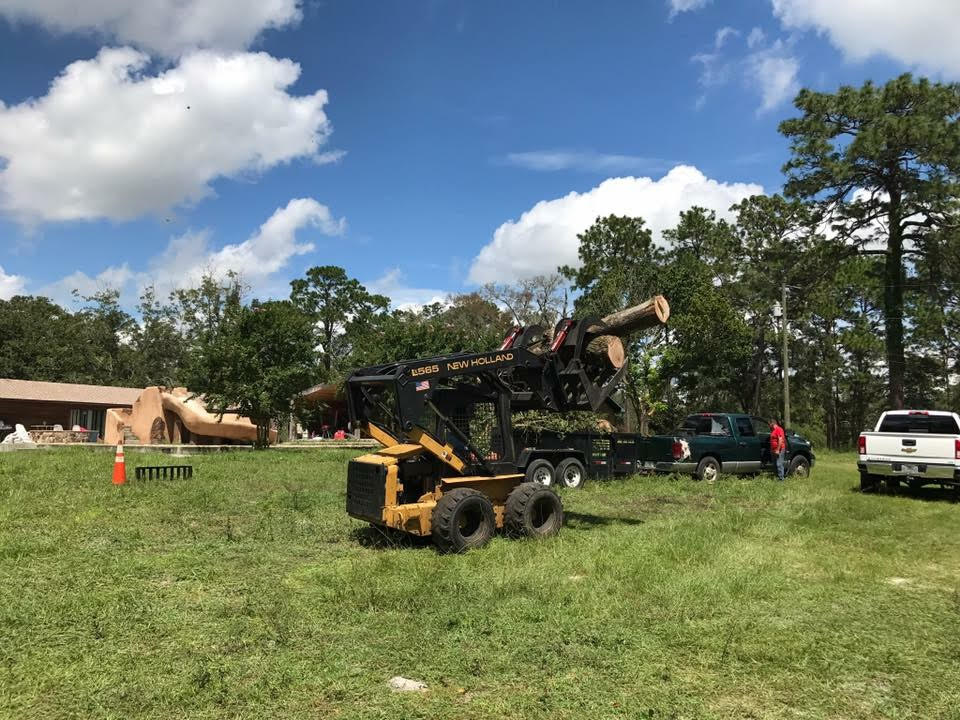
For dead trees, we use professional rigging to control where every piece lands. Rotted wood is unpredictable, and our crew is trained specifically to handle it safely. We own our crane and bucket trucks, so for tight spots or tall trees we have the equipment to do it right.
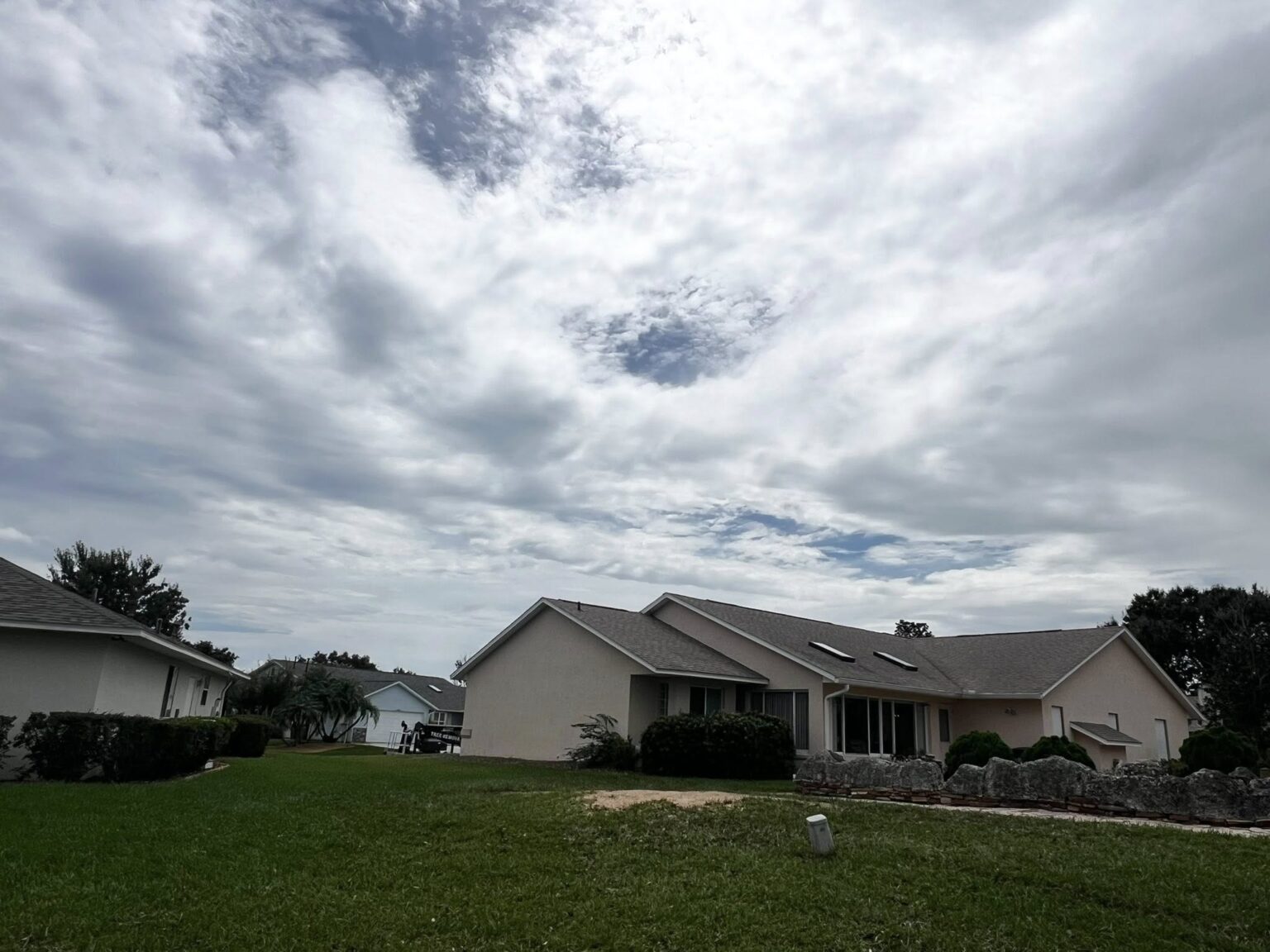
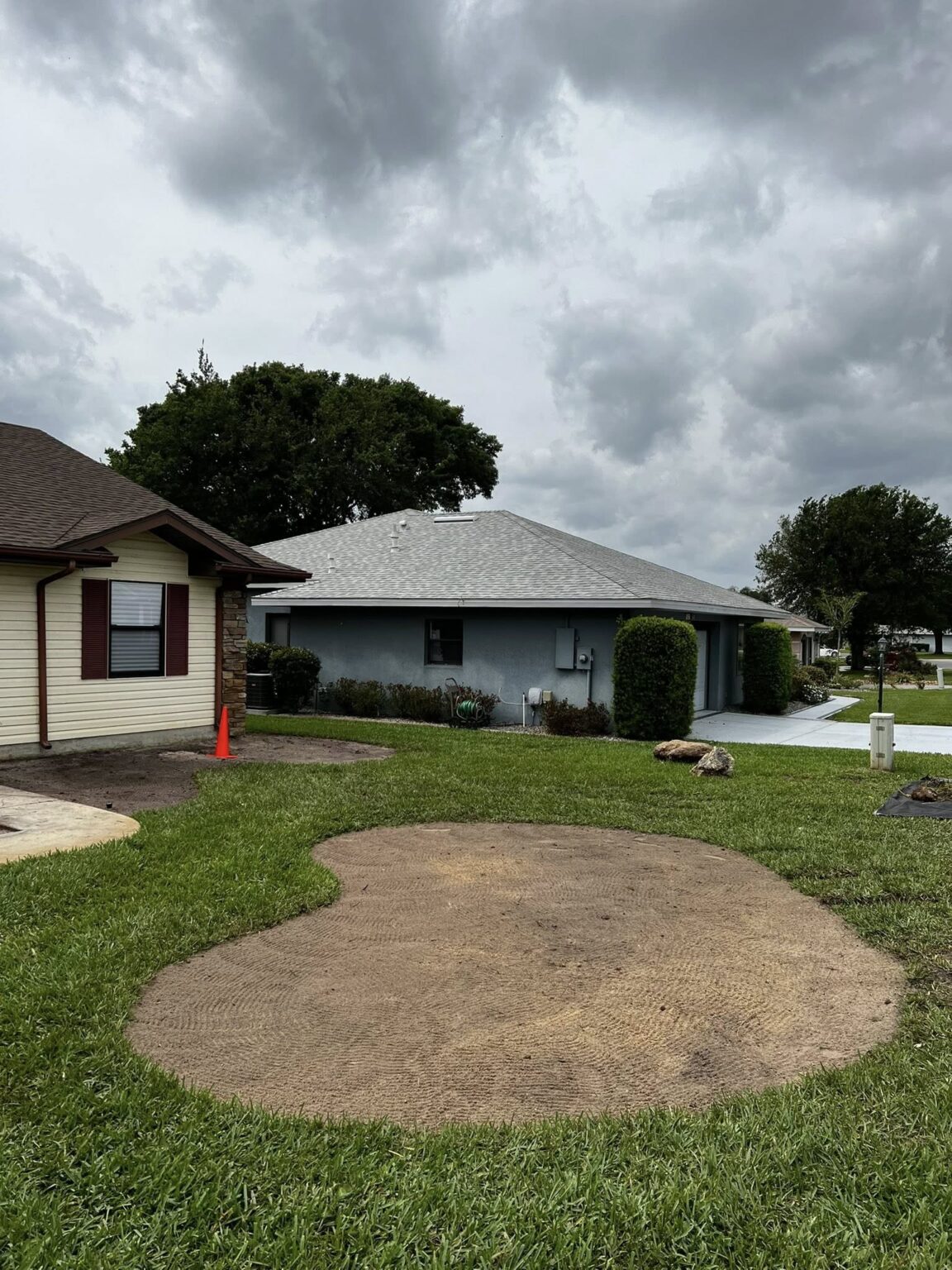
When the tree is down we grind the stump 6 to 12 inches below grade, haul off every piece of wood and debris, and clean up your yard before we leave. You won’t be left with a pile of logs at the curb.
Related Tree Services
- Tree Removal Lake County — Our full tree removal hub with all services
- Tree Removal Near Structures — Houses, pool enclosures, fences, and power lines
- Emergency Tree Removal — 24/7 storm response
- Stump Grinding — Included with every removal
- Palm Tree Removal and Trimming — Queen palms, sabal palms, cabbage palms and more
- Oak and Pine Tree Removal — Large tree specialists with company-owned crane
- Commercial Tree Removal — HOAs, property managers, businesses, and land clearing
Why Lake County Homeowners Trust JT's With Their Most Dangerous Trees
14 years and zero property damage claims. Hazardous tree removal is the highest-risk work we do. Our record is clean because we don’t cut corners on rigging, equipment, or crew training like so many of the fly-by-night companies.
We own our equipment. Crane, bucket trucks, stump grinders, they are all ours. No waiting on rentals. No subcontractors showing up with gear we’ve never seen.
Licensed, insured, and BBB A+. Over $1 million in liability coverage. If something did go wrong (is never has), you’re covered.
Straight answers. We’ll tell you if a tree needs to come down now, can wait a few weeks, or doesn’t need to come down at all. We’re not going to sell you a removal you don’t need.
EXCELLENT Based on 126 reviews
 Posted on Google
 Rebecca SVery happy with the services provided by JT's Tree Removal. Always courteous, professional and responsive. With two huge oaks to trim and clean up, they left our property looking much better than it did before. Thank you JT's crew!!Posted on Google
 Jim DixonOur lawn and bedding was not looking good prior to having JT Landscaping come in and redo our beds, weed , mulch , replant. He did excellent work trimming trees and shrubs making our yard beautiful. We would highly recommend him for any yard work that you need done and he is extremely reasonable and professional.Posted on Google
 marie adamsHad 3 palm trees removed. These guys were very professional, fast and cleaned up after. I would recommend them and would use them again. Thank you.Posted on Google
 Bob RyanEverything JT has done for me has been done correctly and expeditiously. Notice that I haven’t said inexpensively, but you get what you pay for..Posted on Google
 Tyler CarlsonTop notch communication. Cant say enough about this company. Call them and get your trees done before we get a big storm!Posted on Google
 Michael NasonGreat company, very easy to work with. Guided me through ever step of the process. Will use them for any tree projectPosted on Google
 Ronda EnfingerJT's TREE REMOVAL did a AMAZING job for a local leesburg business 👏 would definitely refer to other clients !!! THANK YOU for a great service!!! Very polite and easy to work with.Posted on Google
 Al BoydGreat Job removing my Stump from an old oak tree, our experience with J T TREES was Great , I'll always use them in the future ! And cleaned up better than I expectedPosted on Google
 Keith & Sherry DentonJT came out right away to remove a fallen tree for us. The guys were quick and did a great job with a tricky situation and clean up. Very happy and now trying to get scheduled for more work. Edit: they came back out right on time and removed another tree in a tight spot. Great clean up, great response, at a good price. Highly recommendPosted on Google
 Elizabeth HickmanAbsolutely amazing job! The team was professional, efficient, and did beautiful work trimming our trees, we couldn’t be happier with the results and highly recommend them!
Things To Do In Lake County, FL

Top Restaurants In Lake County, FL
Dead and Hazardous Tree Questions
How do I know if my tree is dead or just dormant?
Scratch a small patch of bark near a branch tip. If the wood underneath is green or white, the tree has life in it. If it’s brown and dry all the way through, that branch is dead. Do this in a few spots around the tree. If it’s dead throughout, it needs to come down.
How fast does a dead tree become dangerous?
It depends on the species and conditions. Some trees stand for years after dying. Others start dropping limbs within months. Once the wood starts rotting inside, the tree becomes unpredictable.
Will my insurance cover a dead tree that falls on my house?
Not always. If you knew the tree was dead or hazardous and didn’t remove it, your insurer may deny the claim under a negligence clause. Removing a known hazard tree is the best way to protect your home and your coverage.
Can you remove a dead tree the same day?
For emergency situations we respond as fast as possible and can often do same-day removal. Standard jobs are typically scheduled and completed within 24 to 48 hours. We own all our equipment so there are no rental delays holding us up.
Don't Wait on a Dead or Dangerous Tree
Call us or fill out the form and we’ll schedule your free on-site assessment as soon as possible. You’ll get a written quote, a straight answer, and no pressure.
call us directly: (352) 504-1210